Tracking the information about your manuscript
Communicate with the editorial office
Query manuscript payment status Editor LoginCollecting, editing, reviewing and other affairs offices
Managing manuscripts
Managing author information and external review Expert Information Peer ReviewOnline Review
Online Communication with the Editorial Department
Download Center
Online First
Coordinated optimization strategy for agc and primary frequency regulation of thermal power units oriented to grid dispatching
2026-10-16A quasi-three-dimensional design method for a supercritical CO₂ centrifugal compressor based on a high-order smooth meridional flow passage algorithm
2026-10-16Numerical Study on the Effects of Flow Channel Height Tolerances on the Performance of Solid Oxide Cell Stacks
2026-10-16Research and application of intelligent diagnosis and self-healing control system for coal mills under deep peak shaving
2026-10-16Research on Carbon Emission Soft-Sensing Model for Coal‑Fired Thermal Power Plants Based on IHRO‑Optimized PGRC‑LSTM
2026-10-16Control strategy optimization for electric-heated molten salt system and its coordinated peak-shaving and frequency regulation with a coal-fired unit
2026-10-16Diagnosis and support reinforcement of 1X horizontal resonance in a vertical centrifugal pump in a coal-fired power unit
2026-10-16Research progress on welding of Inconel 617 alloy for advanced ultra-supercritical power plants
2026-10-15Comparative study on power generation performance of enhanced geothermal systems using water and CO2 as working fluids
2026-10-15Experimental study on sealing failure and pressure-regulating characteristics of a supercritical carbon dioxide back-pressure valve
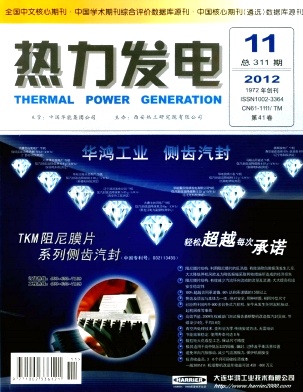
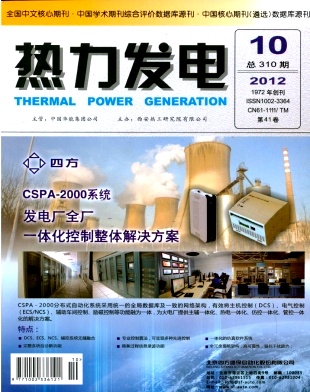
more..Journal introduction
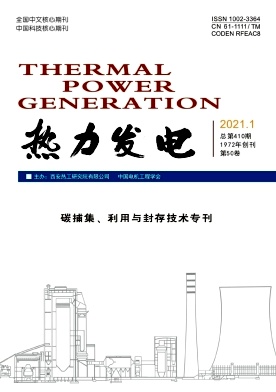
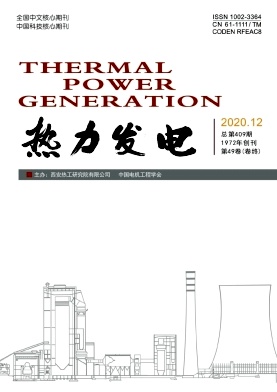
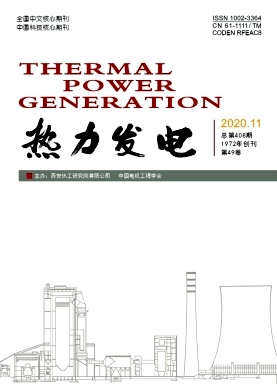
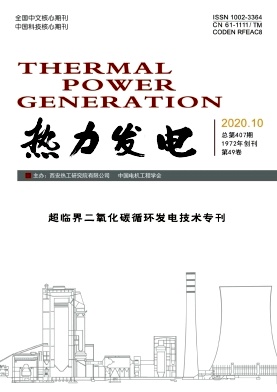
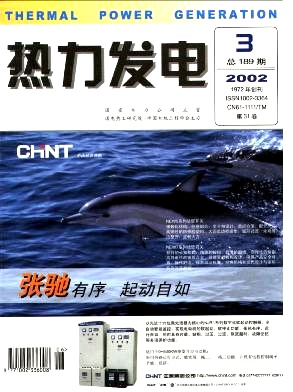
 Founded in: 1972
Headed by: China Huaneng Group Co., Ltd.
Sponsored by: Xi'an Thermal Power Research Institute Co., Ltd., Chinese Society for Electrical Engineering
Periodicity: Monthly
Standard Serial Number:CN 61-1111/TM, ISSN 1002-3364
TEL: (86-029) 82002270
E-mail: rlfdzzs@tpri.com.cn
In-depth interpretation of the 15th Five-Year Plan for New Energy System Construction
Su Lixin;[Objective] The 15th Five-Year Plan for New Energy System Construction, issued by the National Development and Reform Commission and the National Energy Administration, sets the goal of preliminarily establishing a clean, low-carbon, safe, and efficient new energy system by 2030, with key indicators including raising the share of non-fossil energy consumption to 25%, increasing the share of non-fossil electricity generation to 50%, and reducing carbon emissions per unit of electricity generation by over 10%. To gain an in-depth understanding of the plan's top-level design for the transformation of the power and energy industry, this paper presents an interview with Su Lixin, Chairman of Xi'an Thermal Power Research Institute, focusing on the repositioning of coal-fired power, new energy storage, hydrogen and green fuels, and new power systems. [Methods] Based on the plan text and the current state of technological development in the power and energy industry, and following the overarching principle of “safety as the foundation, transition as the priority”, this paper systematically examines the technical pathways for coal-fired power transitioning from a primary electricity supplier to a supporting and regulating power source. It analyzes the engineering progress and application prospects of key technology directions including molten-salt energy storage, supercritical carbon dioxide cycle power generation, co-firing of hydrogen, ammonia, and methanol, and carbon capture, utilization, and storage. [Results] The plan specifies that during the 15 th Five-Year Plan period, new coal-fired power capacity additions will be strictly controlled, while existing units will be retrofitted through wide-load flexible operation(stable combustion at 20% rated load), life extension assessment, co-firing of zero-carbon and low-carbon fuels(40% ammonia co-firing ratio achieved on a 4 MW combustion test rig), and carbon capture and utilization(150 000 tons/year demonstration project), thereby continuing to serve as the bottom-line guarantee for power grid security. Molten-salt energy storage can achieve heat storage for more than 10 hours. The efficiency of supercritical carbon dioxide cycle power generation is 3~5 percentage points higher than that of conventional steam cycles, and the 50 MW coal-fired supercritical carbon dioxide power generation unit has been selected as a national first-set major technical equipment. The bottleneck for scaling up green hydrogen lies in the electricity price, which needs to be reduced to below 0.2 yuan/(kW·h). The plan proposes pathways including direct green-power-to-hydrogen, hydrogen pipeline networks, and international certification systems to address this challenge. [Conclusion] During the 15th Five-Year Plan period, a new energy ecosystem will take shape in which non-fossil energy and coal-fired power co-evolve in a complementary manner, with coal-fired power continuing to safeguard grid security in a cleaner and more flexible way. Scientific and technological innovation should bridge the entire chain from R&D, validation, demonstration, to deployment, and promote the multi-energy coupling of electricity, carbon, hydrogen, ammonia, and methanol, so as to provide systematic support for deep decarbonization of the energy system.
Optimization of flow field design for vanadium flow battery with rectangular electrodes
Jing Bowen;Cui Shuangshuang;Wang Rui;Lu Zheng;Shi Yue;[Objective] Vanadium flow batteries(VFBs) are promising candidates for large-scale and long-duration energy storage. However, their practical application is still constrained by high capital cost and low energy density. Flow field design plays a critical role in enhancing mass transport within the electrodes and thereby improving overall battery performance. This study aims to clarify the influence of different flow field configurations on key parameters in VFBs. [Methods] A three-dimensional multi-physics coupling numerical model was established, incorporating fluid flow, mass transport, charge conservation in both solid and liquid phases, electrochemical reaction kinetics, and heat generation. The model was applied to a laboratory-scale vanadium flow battery with a rectangular electrode area of 4 cm ×7 cm. Based on the validated framework, a systematic optimization of interdigitated flow fields was conducted from global layout to local structural parameters, including main channel orientation, branch channel arrangement, branch channel width and rib width. Subsequently, the study conducted a parametric sensitivity analysis on the optimized flow channel, focusing on electrolyte flow rate, initial state of charge(SOC), and electrode compression ratio. This analysis quantitatively evaluated key performance indicators including velocity, concentration, polarization, terminal voltage, and power-based energy efficiency, aiming to investigate the interrelationships among these physical parameters. [Results] The simulation results demonstrate that aligning the main channels parallel to the electrode length direction significantly enhances under-rib convection by increasing the number of ribs and shortening branch channel length, thereby improving electrolyte penetration into deep electrode regions. A single alternating interdigitated arrangement of inlet and outlet branch channels effectively suppresses preferential flow toward the outlet side and reduces flow dead zones near the electrode edges. The optimal flow field configuration is achieved when both the branch channel width and rib width are 3 mm, under which concentration polarization is minimized to 0.26 mV, representing the lowest value among the 12 investigated flow-field structural parameter combinations. Meanwhile, the maximum temperature decreases to approximately 26.45 ℃, and the power-based energy efficiency reaches 89.58%. [Conclusion] Parametric analyses reveal that an electrolyte flow rate of 7.5 mL/min provides an optimal balance between enhanced mass transport and increased pumping losses. When coordinated with appropriate flow rate under a constant total cell thickness, higher compression ratios lead to increased terminal voltage and efficiency, with the maximum temperature rise remaining below 3 ℃. This research provides guidance for the flow field design of high-performance vanadium flow batteries.
Multi-objective optimization of a tower solar-aided coal-fired power generation system with steam extraction and thermal energy storage
Duan Zhaoxia;Duan Liqiang;Ji Shuaiyu;Wang Yuanhui;Zhang Hanfei;[Objective] With the increasing penetration of renewable energy in power systems, conventional coal-fired units are required to operate more flexibly and provide enhanced peak-shaving capability. To address this challenge, this study proposes a solar-coal complementary power generation system that integrates a tower-type concentrated solar power system with an extraction steam thermal energy storage scheme. The objective is to improve the operational flexibility and peak regulation performance of coal-fired units while maintaining favorable economic performance, thereby facilitating the large-scale integration of renewable energy into power grids. [Methods] Based on measured hourly direct normal irradiance(DNI) data over a full year from a representative region in Inner Mongolia, a comprehensive annual performance and economic evaluation model of the proposed system is established. The model considers the coupled operation of the coal-fired unit, the tower solar field, and the molten salt thermal storage system under varying solar and load conditions. The steam extraction rate and thermal storage duration are selected as key decision variables. A multi-objective optimization framework is developed to simultaneously maximize the annual peak-shaving capacity and annual economic benefit while minimizing the total investment. The non-dominated sorting genetic algorithm II(NSGA-II) is employed to obtain the Pareto-optimal solution set. Subsequently, the technique for order preference by similarity to ideal solution(TOPSIS) is applied to rank the Pareto solutions and identify the optimal compromise scheme suitable for engineering implementation. [Results] The optimization results indicate that under the 50% turbine heat acceptance(THA) operating condition, the optimal configuration corresponds to a thermal storage duration of 5.28 h and a steam extraction rate of 102.46 t/h. Under this configuration, the annual peak-shaving capacity reaches 22.16 MW, with an annual revenue of 40.14 million yuan, a total investment of 229.11 million yuan, and a net present value(NPV) of 142.49 million yuan. In addition, under the 30% boiler maximum continuous rating(BMCR) and 25% BMCR operating conditions, the net present values are 81.50 million yuan and 113.00 million yuan, respectively, demonstrating that the system maintains good economic performance even at deep peak-load shaving conditions. The results reveal that appropriate coordination between steam extraction capacity and thermal storage scale plays a critical role in balancing peak-shaving capability and economic benefits across different operating scenarios. [Conclusion] By reasonably configuring the steam extraction rate and thermal storage duration, the proposed solar-coal complementary system can significantly enhance the operational flexibility and peak-shaving performance of coal-fired units without compromising economic viability. The established multi-objective optimization framework effectively captures the trade-offs among peak regulation capability, economic benefit, and investment cost. The findings of this study provide valuable theoretical support and practical guidance for the optimal design and engineering application of tower-type CSP-coal-fired hybrid power generation systems.
Optimized feedforward pitch control for wind turbines with different equivalent wind speed switching
Jia Chengzhen;Liu Yushan;Chang Xinyuan;Yang Senlin;Wang Lingmei;Chen Zhengkun;Meng Enlong;Li Zhikui;Chu Junlong;Guo Dongjie;[Objective] Inaccurate LiDAR measurements under harsh weather introduce uncertainty in feedforward pitch control, which can degrade turbine performance. To address this challenge, this paper proposes a novel fuzzyswitching feedforward pitch control algorithm for wind turbines. The algorithm enhances reliability by intelligently integrating direct Li DAR wind preview measurements with a Kalman-filter-based equivalent wind speed estimation, ensuring robust operation despite measurement inaccuracies. [Methods] First, a self-developed nacellemounted pulsed coherent Doppler LiDAR system captures line-of-sight wind speed data at multiple upstream points. These measurements are synthetically processed to derive a single equivalent wind speed that represents the effective aerodynamic inflow acting on the rotor. Second, a Kalman-filter-based estimation algorithm is designed to independently obtain an equivalent wind speed signal using standard turbine operational data and a simplified drive-train and aerodynamic model. A fuzzy-logic mechanism is then applied to dynamically evaluate the reliability of both wind speed sources based on real-time quality indicators, and to implement smooth, weighted switching between the Li DAR-measured and the Kalman-filter-estimated signals. This ensures the feedforward controller predominantly utilizes the more trustworthy input at any moment, thereby mitigating the impact of Li DAR inaccuracies. Finally, to fully coordinate the feedforward action with baseline feedback regulation, the parameters of the PI-based pitch controller are optimized offline using the Wind Driven Optimization(WDO) algorithm. WDO adjusts the controller gains to minimize a composite cost function that penalizes both generator speed deviations and blade root flapwise bending-moment fluctuations, thereby achieving an effective balance between speed regulation and load mitigation. [Results] The proposed control strategy was tested and validated using the high-fidelity NREL 5 MW wind turbine model under turbulent wind conditions with a mean speed of 18 m/s. Results show that the fuzzy-logic switching mechanism alone reduces the standard deviation of generator speed fluctuations by approximately 5.3% compared to a conventional Li DAR-only feedforward scheme. Following offline optimization of the feedback controller parameters, the performance gains are further enhanced: the standard deviation of generator speed is reduced by about 8.9%, and the blade-root flapwise bending moment(x-direction) is reduced by approximately 8.7%. [Conclusion] This work demonstrates that the integrated fuzzy-logic switching mechanism and offline parameter optimization effectively mitigate the adverse impacts of inaccurate LiDAR windpreview data on feedforward pitch control. By intelligently blending LiDAR measurements with a Kalman-filterbased estimator, the system maintains reliable wind preview input under uncertain measurement conditions. Consequently, the proposed strategy significantly reduces fluctuations in both generator speed and blade-root loads, enhancing both the power quality and structural longevity of the wind turbine.
Performance and economic analysis of flexibility enhancement technology for coal-fired power units based on molten salt thermal storage
Zou Xiaogang;Chen Li;He Kejia;Niu Guoping;Zhou Fei;Che Hongwei;Li Nan;Shen Jikang;Li Wenfeng;Zhang Xu;Li Wenjie;Xu Mengxi;[Objective] With the advancement of China's “dual carbon” goals and the accelerated construction of a new power system characterized by a high proportion of renewable energy, coal-fired power units are undergoing a fundamental transformation from base-load power sources to essential supporting and regulating assets. Enhancing the operational flexibility of these units, particularly their ability to accommodate fluctuating renewable generation, has therefore become an urgent and critical demand. Molten salt thermal energy storage(MSTES) technology, renowned for its significant advantages in large-scale storage capacity, high operational temperatures, and relatively low cost, exhibits a strong compatibility with the dynamic regulation requirements of coal-fired units. Consequently, it is widely regarded as a pivotal and promising technical approach for achieving substantial flexibility enhancements in the power sector. [Methods] To systematically address this challenge, this study proposed and designed three distinct MSTES coupling system configurations for coal-fired units: namely, the steam heating system, the electric-steam hybrid system, and the all-electric heating system. A representative 350 MW supercritical coal-fired unit was selected as the specific research object to ensure the practical relevance and applicability of the findings. The professional thermal system simulation software, EBSILON, was employed to construct high-fidelity models for each coupling configuration. These models underwent a rigorous calibration and verification process against design and operational data, ensuring that the simulation error for all key performance parameters was reliably controlled within an acceptable margin of 5%. Utilizing these validated models, the study conducted a comprehensive comparative analysis, systematically evaluating the peak-shaving capability(deep load reduction), peak-load boosting capability(increased power output), and primary frequency regulation performance of the three systems. Beyond technical performance, a detailed economic benefit analysis was performed, calculating and comparing key financial metrics including the static investment payback period, financial net present value(FNPV), and financial internal rate of return(FIRR) for each option. [Results] The simulation results reveal clear and significant performance differentials among the proposed systems. In terms of peak-shaving performance, which is crucial for absorbing excess renewable power, the ranking is electric heating > electric-steam hybrid > steam heating. Notably, the electric heating system can reduce the unit's minimum technical load from 50% down to 0(theoretically enabling full shutdown while storing energy), whereas the hybrid and steam systems lower it to 16.8% and 18.2%, respectively. For peak-load boosting, important for meeting daily high demand, the order is electricsteam hybrid > steam heating > electric heating. The hybrid and steam systems can boost the peak output from 80% to 100% of unit capacity, while the electric heating system increases it to 83%. Their corresponding sustainable peak output durations are 2 h, 1.5 h, and 1.0 h, respectively. Regarding fast frequency regulation, the electric heating and electric-steam hybrid systems perform equally well and are substantially superior to the steam heating system. Both improve the comprehensive frequency regulation performance coefficient from a baseline of 0.98 to 5.7~7.7、5.7~7.7、0.98, indicating a much faster and more significant power response. The steam heating system showed no measurable improvement in this metric. From an economic standpoint, the all-electric heating system demonstrates the most favorable financial profile, with the shortest static payback period of 3.8 years, an FNPV of 285.53 million yuan, and the highest FIRR of 24.2%. The electric-steam hybrid system follows closely(5.0 years, 280.09 million yuan, FIRR of 17.5%), while the steam heating system also remains economically viable with a payback period of 5.2 years, an FNPV of 224.95 million yuan, and an FIRR of 17.0%. [Conclusion] The research results quantitatively elucidate and contrast the distinct performance trade-offs and economic characteristics inherent to different MSTES coupling pathways. The electric heating system offers superior economic returns and excels in deep peak-shaving and frequency response. In contrast, the hybrid system provides the best peak-load boosting capability. The steam heating system, while less flexible, remains a technically and economically feasible option. These detailed findings provide critical technical guidance and a robust, data-driven decision-making framework for power plant operators and planners. They are instrumental in selecting the most appropriate MSTES integration strategy for specific grid service needs, thereby facilitating the effective engineering application of MSTES technology to support the crucial flexibility enhancement of coal-fired power units within the evolving energy landscape.






































































































































































































Contact Us
